

The math that matters
Nº 039

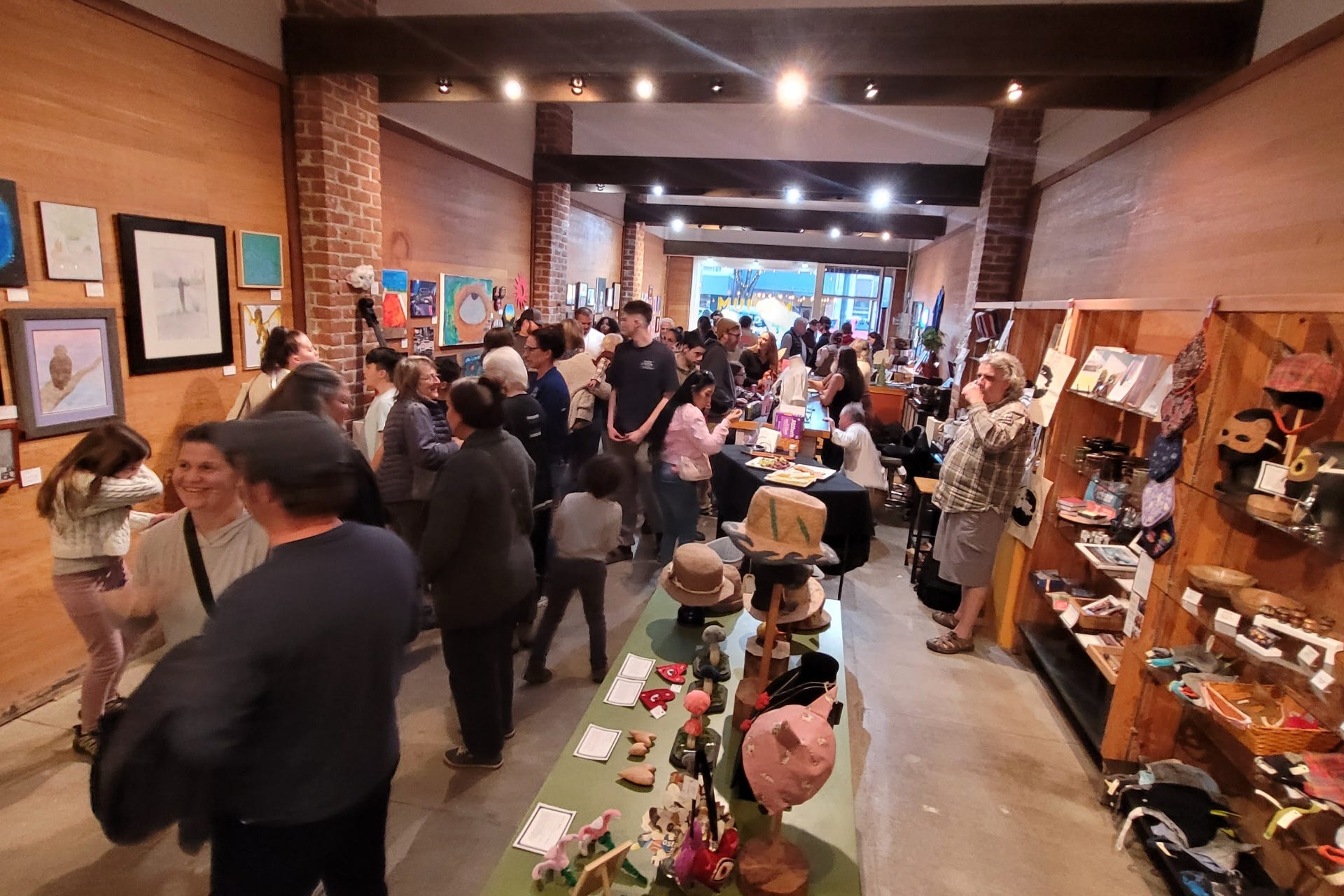
It was 9 p.m. last Thursday, and I was cutting placards. One hundred and twenty of them. Each one printed, trimmed, and sorted. A name, a title, a medium, a price. My back hurt. My eyes were blurring. I was exhausted. The gallery was quiet except for the sound of a craft knife on a cutting mat and a 90s grunge playlist we had going. Nirvana. Pearl Jam. Soundgarden. The kind of music that pairs well with tedious work and mild existential dread. Lillian was across the room, working on hanging the show.
I turned to her and said what I always say when the work gets too big to see the edges of. “Why are we doing this to ourselves?” “Does any of this even matter?”
She listened. That’s what she does. She lets me complain and get it out of my system without trying to fix it. Just waits until I circle back to the answer, which is the same every year.
The kids.
Five years ago, when our board proposed that we put on a youth show, I wasn’t into the idea. I don’t have kids. Don’t want ‘em. Don’t need ‘em. But in the years since, it’s become one of the biggest, most important things we do at the gallery, and I’m here for it.
This was our fifth youth exhibition. Five years of putting kids’ art on a wall and letting them see what that feels like. Five years of selling their art and giving 100% of the sale back to them. We take nothing. Not a commission, not a handling fee, not a percentage. The kid gets the cash.
But at 9 p.m. on a Thursday, with 40 placards still in the queue and no end visible, that answer can feel far away. You start doing the math on your own time. The hours spent emailing parents. The intake forms. The answering questions. All of it unpaid. All of it invisible to anyone who walks through the door on opening night.
Here’s the thing. Doing big things in a small town doesn’t scale the way you think it will. The effort is enormous. The return is something else entirely.
Friday night, when the show opened, over 600 people came through the door. Six hundred. In a town where you recognize half the faces at the grocery store, that number means something different than it would in San Francisco or Los Angeles. It means the town showed up. It means parents drove in from Laytonville, Willits, Hopland, and Redwood Valley. It means teenagers who’d never had their art on a wall stood next to their pieces and watched strangers stop and look.
Dozens of pieces were sold that night. More in the days following.
Our board members and volunteers, who had been running on caffeine and adrenaline since opening, stood around after the crowd thinned and let out the breath they’d been holding.
Shortly after, Joe from the gelato shop across the street stopped by. He said he’d been busy too. That was it. He wasn’t complaining. He was reporting in. His night had been shaped by the same event that shaped ours, just from the other side of the street.
That’s what community looks like when you peel it back. Not a single grand gesture but a web of people quietly wrecking their evenings so something good can happen. Nobody coordinates it. Nobody gets a medal for it. The gelato guy doesn’t get thanked for staying open late any more than Lillian gets thanked for listening to me spiral on a Thursday night.
I know that I’ll spiral again next year. Somewhere around placard number 80, I’ll turn to her again and ask why we’re doing this, and she’ll listen, just like she did last week, and she’ll wait for me to find the answer again.
The spiral is part of the process, and I’ll forget it by Saturday, but the kids won’t forget that their art hung on a wall and that somebody bought it.
That’s the math that matters.
cp out.