

The Last Record Store
Nº 041

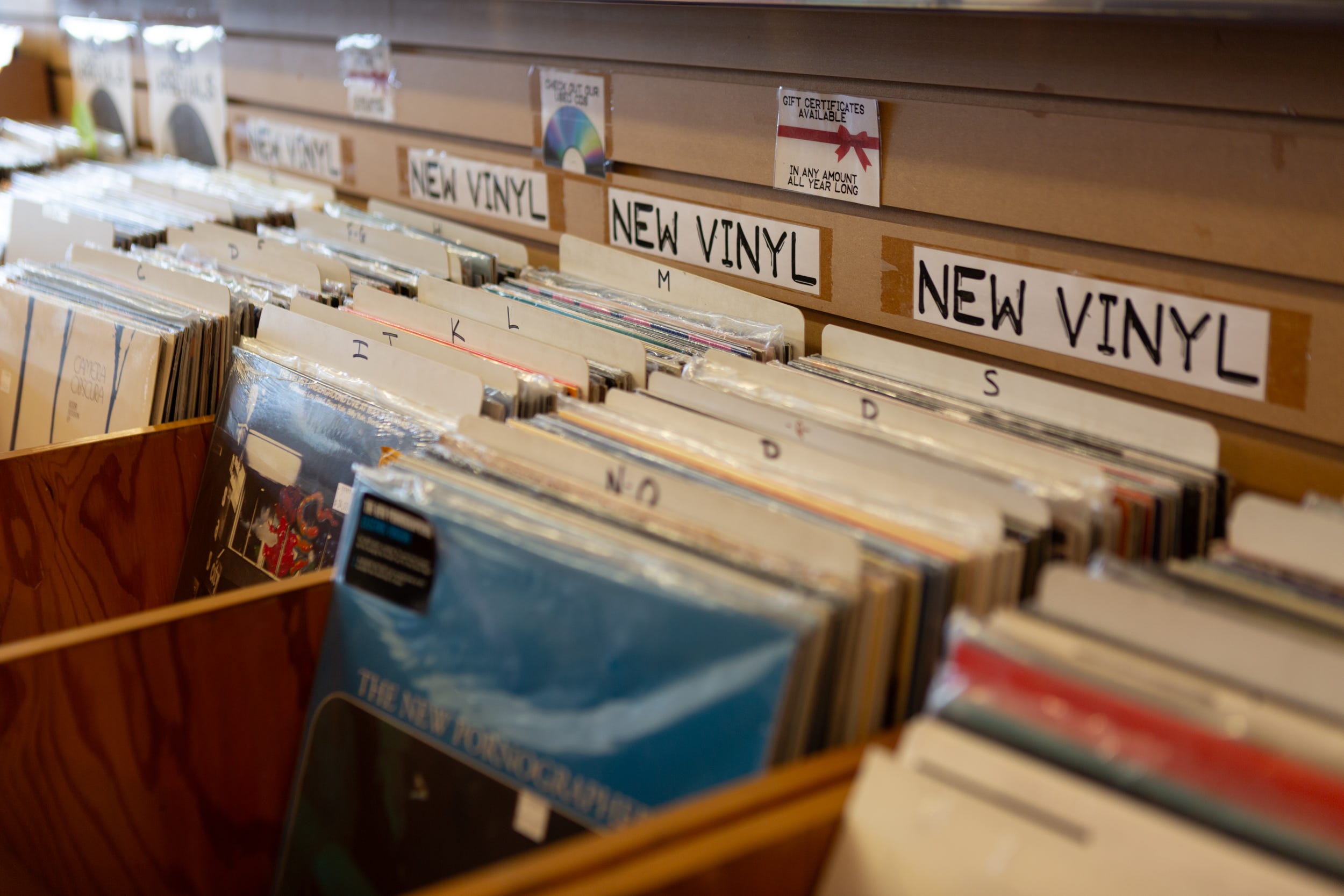
The Last Record Store wasn’t in the mall. That was the point. You had to know where it was.
My friend Ed and I made the drive from Redwood Valley to Santa Rosa once a month, a routine that felt more serious than we ever said out loud. We’d cram ourselves and a pile of gear into my small truck and head south. Redwood Valley didn’t have a mall or a record store, so Santa Rosa became a regular run. Food court, game store, the usual stops. Ed ran a BBS called The Continuum, which put us in a small circle of people doing the same strange thing. Once a month, we sat in a room full of guys who understood it without needing to explain it. Cables, disks, low voices, the hum of machines. No one trying to sell you anything. No one pretending it was bigger than it was.
Then we’d go to the mall.
Food first, then the game store, moving through it without thinking. Everything was laid out for you. Bright lights, clear paths, the comfort of not having to know yourself too well. Whatever you were supposed to want was already waiting under fluorescent light. The mall didn’t ask much from you. It offered the relief of recognition. Here is the shirt. Here is the cassette. Here is the version of rebellion we’re selling this season. You didn’t have to decide much of anything. You just followed the path.
Then we’d leave.
The record store was always the last stop. It sat off by itself, on a side street outside that system. No window displays, no sale signs, nothing trying to convert foot traffic into a purchase. Just rows of bins that felt deeper than they needed to be. Records still took up a lot of the space, but the front racks were filled with CDs in those long plastic cases that never quite fit anywhere. You had to flip through everything. Plastic crashing into plastic as you moved from one to the next, your fingers picking up a faint layer of dust. Nobody asked if you needed help. Nobody pointed you toward anything. You stood there and worked your way through it.
It was late summer, 1991. Nevermind had just come out, but if you were paying attention, you already knew Mudhoney. You’d heard TAD. You knew who The Melvins were and what that low-end weight did in your chest. The records didn’t sound clean. They sounded like they’d been made in rooms that were a little too small, like the sound had nowhere to go. It didn’t feel like a trend yet. It felt like someone had stopped trying to make things easy.
I didn’t have language for that at the time. I only knew it didn’t match what I’d been listening to before. The hair-metal stuff had been earlier. Motley Crue. Poison. Def Leppard. By the late 80s, I was already into thrash, Metallica, Anthrax, Megadeth, looking for something faster, heavier, less dressed up. But this felt different from that, too. Less like performance, more like recognition. It felt less polished, less theatrical, less interested in selling me an attitude. MTV ran one version of rebellion. The mall sold another. This sounded like it had slipped past both of them.
Of course, it didn’t stay outside for long. Nothing does. The music that felt least interested in selling me anything became one of the biggest products of the decade. That contradiction isn’t lost on me. But the feeling came first.
After a while, it started to feel like I’d been sold something. Not in a dramatic way, not in some phony conversion-story way, just a slow realization that too much of it lined up too neatly. The music, the clothes, the attitude, even the acceptable forms of nonconformity. It was all there waiting for you, pre-sorted and brightly packaged, as if self-discovery were just another retail category. I don’t think Gen X invented irony, but we were handed it early and taught to use it as both style and shelter. We learned to roll our eyes before we learned to trust what we loved.
A lot of what my generation calls independence came wrapped in neglect. We were left alone, under-supervised, expected to entertain ourselves, form our own taste, and not make too much of it. Some of that made us resourceful. Some of it just made us good at lowering our expectations. We turned that into an identity because identity is what you make from the materials you have. We called ourselves self-sufficient. Sometimes we were. Sometimes nobody was coming, and we decided to make a virtue out of it.
So we drove.
Not as a statement and not because we thought we were rejecting anything. It didn’t feel that clean. It felt like a drift. Like moving a few degrees off course and ending up somewhere louder without planning it. That was true of a lot of things then. You found your way by accident, by rumor, by following somebody who had slightly better radar than you did. Nobody curated your life for you. That sounds noble now, but a lot of it was just absence. You made your own map because there was no map.
The store didn’t tell you what to like. It didn’t surface anything. You had to stand there and figure out what was worth your time. That was the exchange. Time for access. Attention for discovery. It wasn’t efficient, and it wasn’t supposed to be. If something mattered, you gave it an afternoon. If you were curious, you did a little work. I don’t think that made us better people, but it did make desire feel more real. It had weight. It cost something.
That part stayed with me more than the music.
The shift away from it didn’t happen all at once. Big stores got bigger. Smaller places disappeared. The mall filled in the gaps, then even that started to thin out. Each step felt normal while it was happening, which is usually how these things go. Convenience is easiest to surrender to when it arrives one improvement at a time.
Now everything shows up on its own. Music finds you before you know you’re looking for it. Algorithms, playlists, suggestions, a constant stream that keeps moving whether you’re paying attention or not. It works, and it works better than what we had. It removes friction. It removes time. It removes the need to go anywhere at all. The system got better at its job.
That is supposed to feel like progress. Mostly it does. But there’s still a part of me that doesn’t trust anything that arrives too easily. Not because I worship inconvenience or think bad retail was morally superior. I don’t miss scarcity for its own sake. I miss the moment before preference gets predicted. I miss the small amount of effort that let a choice feel like mine.
There’s no drive anymore, not in the literal sense and not in the other sense either. There’s no distance between you and the thing you might want, no pause in which you have to decide whether it’s worth the time, no place that asks anything from you before it gives something back. For a long time, this was the idea. Everything, everywhere, all at once. No waiting, no searching, no missing out. Now that it’s here, it often feels less like abundance than managed appetite.
Back then, it didn’t feel like anything. It just felt like where we ended up. Now it feels like a choice, and it’s one I have to keep making.
So the refusal looks different now. It’s smaller, quieter, and easy to miss if you’re not paying attention. You go out of your way for something that doesn’t scale. You take the long route when you don’t need to. You choose the thing that isn’t optimized for retention. You let parts of your life stay inconvenient on purpose, because convenience has a way of turning into compliance when you’re not watching.
The Last Record Store is still there in Santa Rosa. New owner, new name, still sitting outside of everything else. I still go when I’m down that way. Sometimes I buy something. Sometimes I don’t. I’m not looking for 1991 when I walk in. That would be its own kind of delusion. My taste has changed. The store has changed. But I still stand there longer than I need to, flipping through rows nobody sorted for me, fingers picking up that faint layer of dust. Letting it take time.
Nobody asks what I’m looking for, and I don’t have to answer.