

The beauty of unfinished things
Nº 013

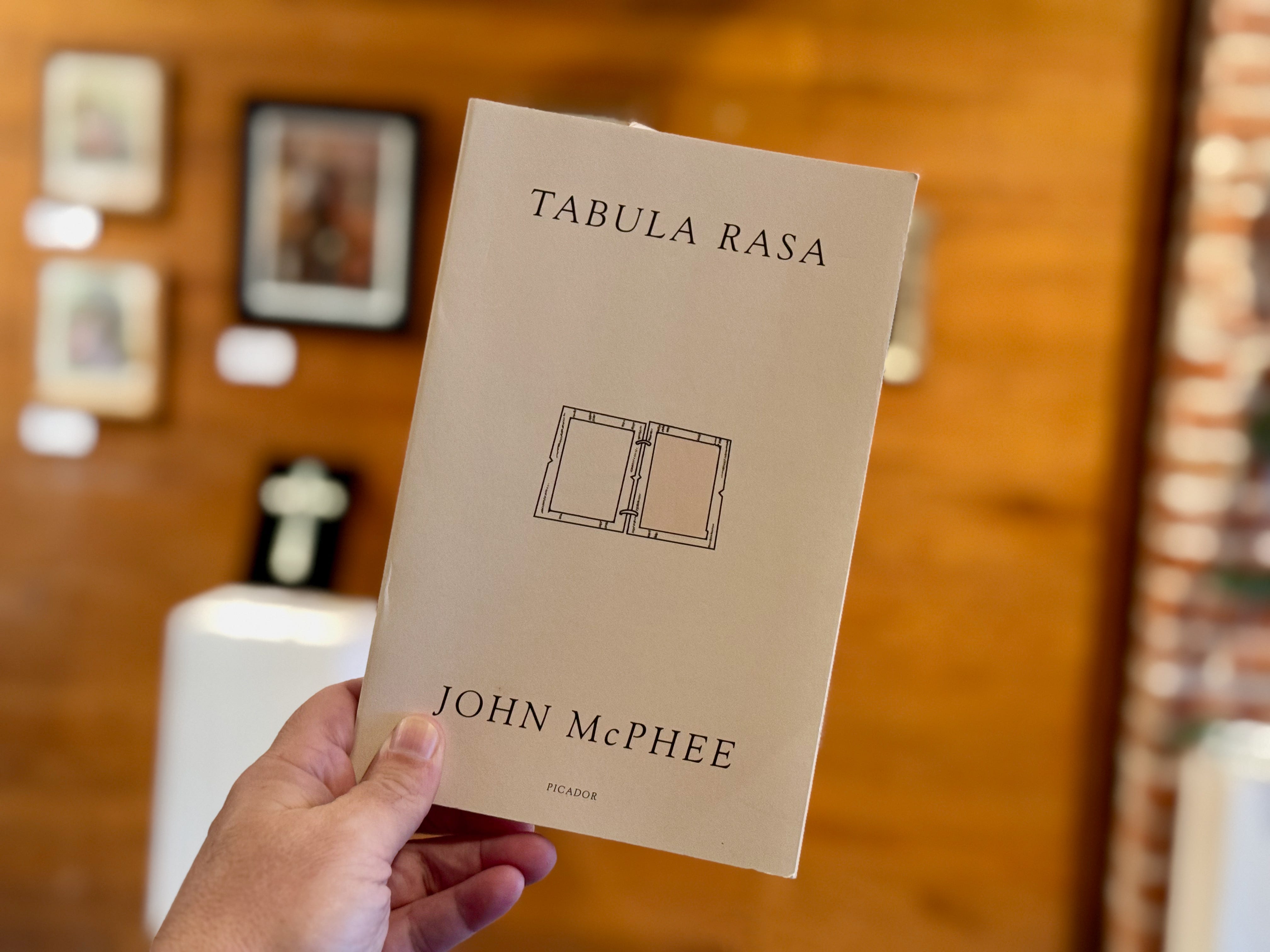
I bought John McPhee’s Tabula Rasa on a whim. It was mid-October, during the annual Pumpkin Fest celebration in downtown Ukiah. The air smelled like kettle corn and diesel from the carnival rides. Families were wandering the blocked-off streets, faces painted orange, kids dragging plastic pumpkins. I walked into the bookstore to get away from the noise. Inside, it was quiet and calm. I ran into my friend Toni, who was working behind the counter, and we talked for a bit about the crowd outside before I wandered toward the nonfiction section. I picked up the book without much thought, maybe because the cover felt calm compared to the chaos outside.
I’d never heard of John McPhee before. Not his name, not his books, nothing. That might sound strange for someone who works in journalism, but he’d never crossed my radar. Maybe his work stayed in the quieter corners of the world, the ones I hadn’t looked in yet.
What surprised me most was how quickly his voice drew me in. He isn’t chasing big moments or breaking news. He pays attention to the small things most people walk past. In Tabula Rasa, he writes about ideas he never finished and projects he set aside, almost like opening a drawer of old notes. There is no rush in his voice. It made me realize how rare that kind of patience has become.
Each piece feels like a loose page pulled from a long career. Some are short, some wander, some stop without warning, as if he'd set down the idea and never come back. The tone stays plain and direct. His humor sits in small turns of language, nothing flashy. The clarity feels simple at first, but it comes from long practice at knowing what to leave out.
The book isn’t a memoir in the usual sense. It feels more like someone emptying an old desk drawer and letting you see what’s inside. McPhee writes about ideas he carried for years but never shaped into full stories. There is something honest about that, almost as if he is saying that not everything needs to be finished to have value. I found that comforting. I have my own piles of half-started things, old negatives, hard drives, and notes I may never use. It’s easy to look at all that and see failure, but his approach made me see it as part of the process. Sometimes keeping track of a thought is enough.
By the middle of the book, I was copying a few notes into my own journal so I could sit with them later. His tone stayed even throughout, steady without calling attention to itself.
There’s a sadness that runs under Tabula Rasa. You can feel time pressing down on him. He’s closing drawers, wrapping up a life’s worth of curiosity. The pieces read like postcards to himself. He doesn’t chase nostalgia, but it hangs in the air. There’s something deeply human in that, wanting to tidy up before you go, knowing you never really can.
When I finished the book, I looked him up online, trying to get a sense of who he was beyond the page. I didn’t go far, only enough to see the span of his work and the long list of books I had somehow missed. What struck me most was how steady his career has been, how he built a life out of noticing things most people ignore. It made the book feel less like an ending and more like a window into the way he sees the world.
That was the shift I didn’t expect. Reading McPhee didn’t push me to want to write more. It made me want to move through the day with more attention. To walk without checking my phone. To sit with a thought long enough to see what it wants. It reminded me that good work comes from taking your time.
Maybe that’s why I picked up the book that day. The noise outside felt sharp and restless, full of the kind of hurry I try to avoid. Inside, McPhee was talking about small things and unfinished ideas. I walked out with the book under my arm, the crowd fading behind me, thankful for the quiet reminder that the small stuff still matters.
McPhee is a master, isn't he? Yeesh, that guy.
Well done, Chris. Well done here.
A lovely review. It resonated. Thank you.
Attention is the part where you actually notice something, learn from it, shape it, or let it shape you. Completion is just a checkbox.
Says the person that rarely finishes thi...