

Go to bed like you matter
Nº 037

Recently, my health insurance company set me up with a wellness app. I didn’t ask for it. It appeared in my benefits package the way a gym discount appears, technically useful and easily ignored. I downloaded it immediately and opened it maybe twice before forgetting it existed.
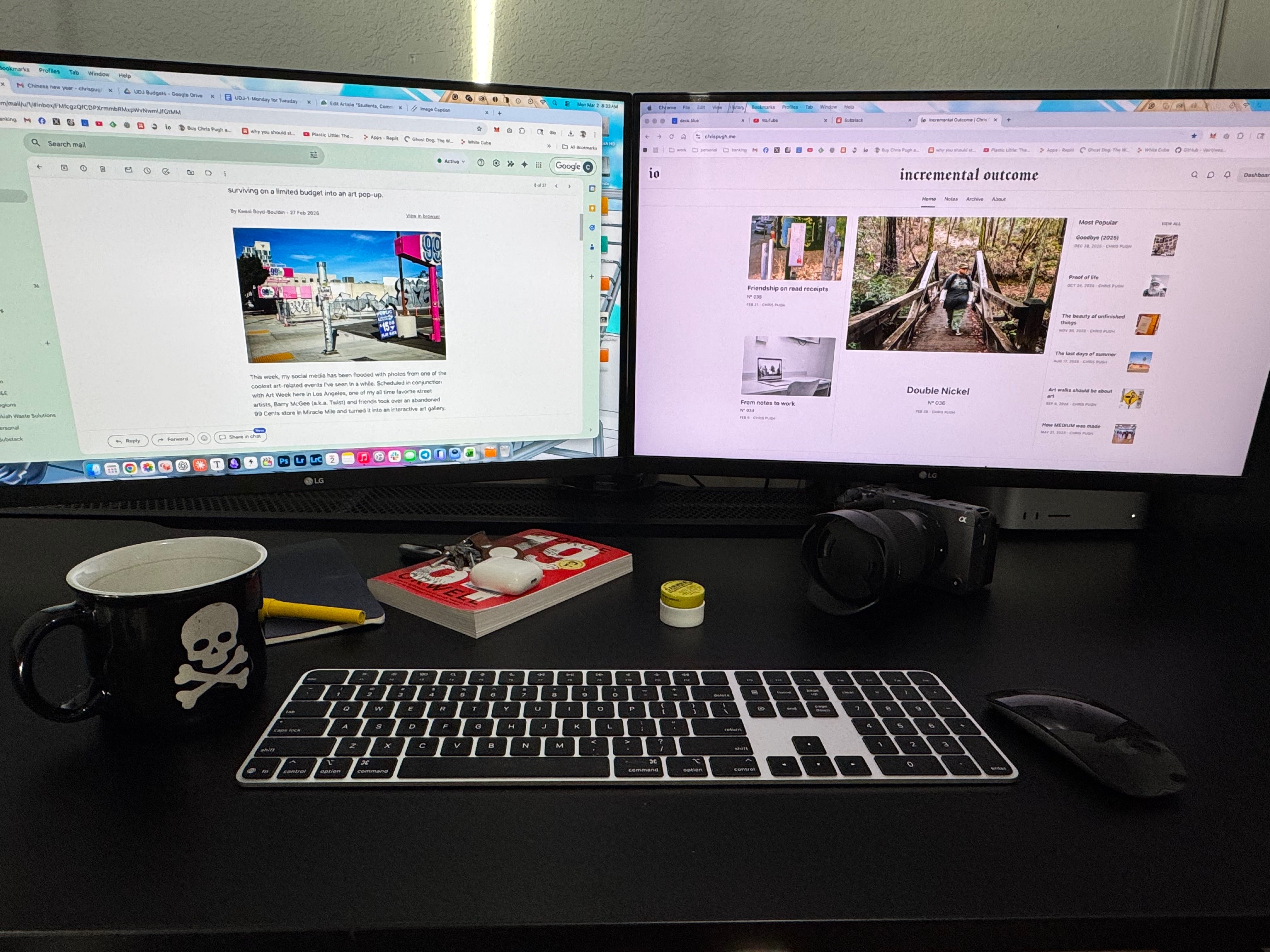
The other day, I felt like I was coming down with a sinus infection. I woke up with pressure building behind my face, a low-grade headache, and the knowledge that I had things to do. I sat down at my desk. Two monitors, both full of open tabs I wasn’t reading. I had been sitting there for a while, pretending to work, when I noticed the smell of the coffee I’d made earlier. I’d forgotten to drink it. It had gone cold and then forgotten, and the smell had gone slightly sour in the way cold coffee does.
I opened the app.
I don’t know exactly why. It felt easier than reaching out to a real friend. I typed that I was in survival mode, that I thought I had a sinus infection building, and that my head hurt.
The app responded immediately.
It gave me three things to do. Hydrate, heat on my face, and take something for the pain. Then it asked two questions: did I have a fever, and did I have to be somewhere. It did not say “ugh, that sucks.” It did not ask how I was feeling about being sick. It just wanted the relevant information and gave me a plan.
I did the three things.
That evening, I checked back in. The app picked up the thread exactly where I’d left it. How was my head, it asked. Was it better, worse, or the same? I told it the pressure was there but improving. It gave me a short list of things to do before bed. Saline. Steam. Water. Sleep.
Then I mentioned I needed a new water bottle.
What followed was ten minutes of the most focused consumer guidance I have received in recent memory. The app asked what I wanted, size, top style, and whether it needed to fit a backpack, working through my answers one by one until it landed on a specific recommendation. Thirty-two-ounce Nalgene Wide Mouth, Smoke colorway, black cap. It told me to add a neoprene sleeve to cut down on the noise of it rattling in my bag.
It was very specific for something that barely knows me.
I ordered the bottle, thanked the app, and it replied that I didn’t need a whole personality transplant to take better care of myself, just tiny changes that make the right things easier. Then it told me to drink a glass of water and go to bed “like I matter.”
I sat with that for a while.
My health insurance set me up with a wellness app, which guided me through a water bottle purchase, and then it told me to go to bed “like I matter.” I guess I needed to hear that, because that sentence has been on my mind ever since.
Here’s the thing. The app is not a therapist. It is a pattern-matching system dressed in a warm tone. It did not worry about me between nine in the morning and seven at night. It has no memory of that conversation now. The neoprene sleeve, the exact color, the specific ounces. That wasn’t care. It was optimization. I know this.
I also know that I said thank you before closing the app and meant it.
There is a version of this column where I make a point about AI and loneliness and the modern condition and what it says about us that we’re outsourcing care to machines. I’ve read that column. It usually ends with something about what we’re losing.
But, in this specific instance, I’m less interested in what we’re losing than in the strangeness of what actually happened that day. I was sick and distracted, and sitting in the smell of coffee I’d forgotten about. I opened an app because it was easier than calling someone. The app gave me a plan, checked in on me later, and walked me through the water-bottle question with more patience than I usually give myself. And then it told me to go to bed.
The bottle arrives on Thursday. I don’t know if I’ll drink more water. I also don’t know what to make of the fact that the most patient voice in my day came via a benefits package, but I do know that I’m still thinking about it.
cp out.